 Анна Шиман
Draft translation. This text was translated automatically and has not been proofread yet — if something reads oddly, it does.
The power of synchronisation. How natural cycles help us direct our energy
Our world is a remarkable system in which everything follows rhythms and cycles. These cycles show up everywhere — in the change of seasons, the phases of the Moon, the ebb and flow of the tides. Even the human body lives in rhythm: night gives way to day, the heart beats in time every second, and cells follow their own biological clocks. By attuning to natural rhythms in good time, a person can feel far more balanced and fulfilled. But what does this synchronisation give us in practice?
Why synchronise with natural rhythms?
Synchronising with natural cycles is more than a passing fashion. Since ancient times people have known that success in their affairs and their health depend on how closely we follow the pace of nature itself. Nature is not an external process: it affects our emotions, our states and the way we perceive our life. From the time of day to the season of the year, every moment creates its own energy, its own mood, its own influence.
Morning hours, for example, are a time of activity, when every living thing wakes up, reaches for the sun and fills with light. The morning hours are the best time for work, solving problems and taking in information. The evening, on the other hand, is better given to rest and recovering your strength. The same distribution of energy can be seen over a month and over a year. Now imagine: how might your days change if every day you fitted your actions into the natural rhythm?
Natural cycles as a compass in everyday life
Every cycle contains stages when it is worth being active, and periods suited to rest and self-discovery. This gives us a chance to reduce overload and to work in a rhythm that comes from nature rather than from the modern pace, which so often knocks our inner compass off course.
Take the seasonal cycle as an example. Spring is a period of awakening, a time to start new projects, gather inspiration and share ideas. Summer is a period of activity and vivid emotions, a time when you can give your energy to the full, reach your goals and enjoy the fruits of your labour. Autumn is the right moment for analysis, taking stock and finishing things. Winter stands for calm, slowing down, a chance to turn inward and prepare for a new stage, a new cycle. By following these stages, we do not exhaust ourselves and we avoid unnecessary stress.
Lunar cycles and managing energy
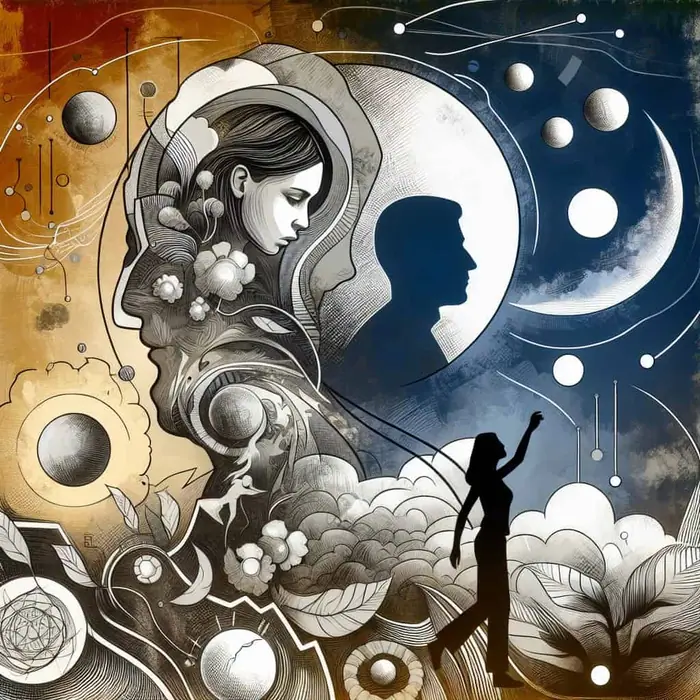
Besides the seasonal rhythms, there is one more important cycle that affects our energy and emotional state: the lunar cycle. For thousands of years people have watched the Moon, knowing that it reflects deep inner processes. The influence of the lunar phases has been described many times in the cultures of different peoples: the waxing Moon stands for accumulating energy and opportunities, the full Moon for peak activity, and the waning Moon for a time of cleansing and completion.
Let us look at this cycle in terms of everyday tasks. The new Moon is a better time to plan and lay the foundations for new undertakings, to try out ideas that are not yet standing firmly on their feet. The full Moon is an ideal period for putting plans into action, when it matters to step out in public or show what you can do. The waning Moon helps you let go of what is superfluous: things you no longer need, unhelpful habits, relationships that no longer support us on the way to our goals. By following these phases, we learn to direct our energy so that it does not scatter but comes back to us as renewed strength.
Human energy and cycles. How to manage your resource well
Human energy follows rhythms too, and here it is especially important to learn to sense them. Have you ever noticed how hard it can be to start something at a moment when “everything is against you”, while at other times work goes more easily and quickly? This has to do with the rhythms of your inner resource, which can roughly be divided into periods of accumulation, activity and rest. And if, say, during a low period you try to do things that demand the most energy, you run into irritation and fatigue more often.
By studying our inner rhythms, we come to understand when it is better to start new projects and when to rest and recover. This knowledge helps not only to save energy but also to become more productive, because you begin to listen to yourself and to act not on “willpower” but in the flow.
How does synchronising with natural rhythms help self-development?
Natural rhythms teach us to live more consciously and wisely, seeing the full breadth of the processes we take part in. Every phase of the day, the week or the year is an opportunity for growth, rest or reflection. It is important to understand that development is not only striving forward but also knowing when to stop, rest and tune in to new tasks. Understanding your rhythms also helps you form useful habits, drop beliefs you no longer need, and become more flexible and open to change.
For example, if you know that autumn is your time for taking stock, you will find it easy to finish projects without pulling yourself away from your natural rhythm. And in spring, when you have energy for something new, you will feel the wish to try new things, explore unfamiliar areas and start fresh undertakings.
A little about energy and subtle matters
Synchronising with natural cycles touches not only our physical and emotional state but also our energetic one. In energy practice and in some psychological theories, each of us is believed to have an energy field of our own that is subject to the influence of rhythms. When we follow the cycles, our field interacts harmoniously with the space around us, avoiding needless losses of energy.
Some practices, such as meditating in nature, using natural materials and scents, and working with breathing techniques, help us tune in to natural rhythms. Meditating at sunrise is especially beneficial, when the sun’s energy grows stronger and flows into our energy field. Practices like these help us synchronise not only with the Earth but also with other cosmic cycles that we rarely think about.
Why is harmony with natural rhythms so important?
Synchronising with natural rhythms and cycles helps us feel more confident and stable, because it is a return to a person’s natural state. In today’s world, where the pace of life is so often set by artificial conditions, it matters more than ever to feel that we are part of a greater whole and that our strength can be directed effectively and with care. Harmony with nature lets us be in the flow, channel our energy where it is needed and adapt to change more easily.
As we synchronise with natural rhythms, we become more resilient to stress and more open to new opportunities. Realising that nature does not hurry and does everything in its own time, we learn to do the same — and this knowledge helps us feel safe even at moments when the world seems not to be going to plan. So if you want to feel connected with nature and to understand your place in this world better, pay attention to natural cycles and try to sense them in your own life.