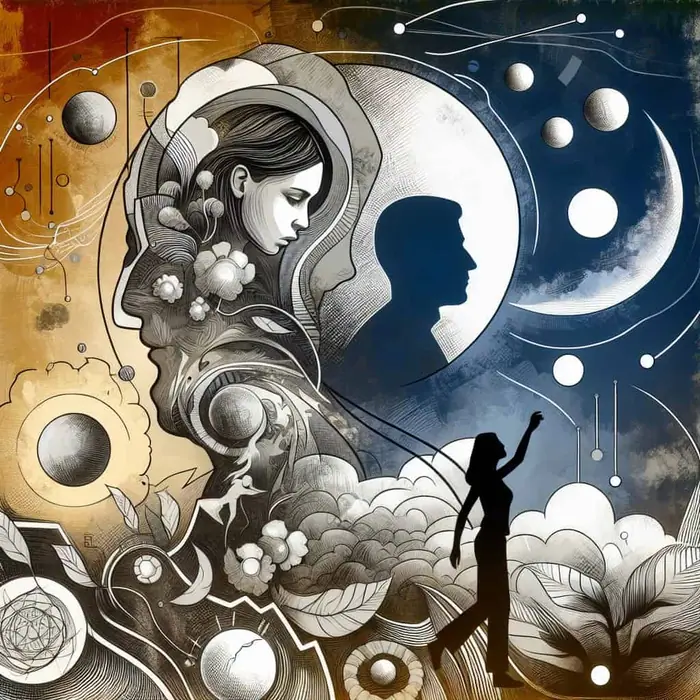
 Анна Шиман
Draft translation. This text was translated automatically and has not been proofread yet — if something reads oddly, it does.
On subpersonalities, depth psychology and the search for an inner resource.
Once, during a consultation, a lovely young woman turned in just a few minutes from a critical, devaluing “Terrible Mother” into a beautiful, light-hearted “Aphrodite”.
I couldn’t help admiring her shining eyes, her flushed cheeks and the sparks flashing in her gaze.

You may not even see a person, but their psychic field, long before any action or sign, will tell you about their state. And that state, of course, includes a certain role, with its own mental, emotional and behavioural structure.
What does this mean for you and your relationships?
It means that at that moment you will most likely take up a complementary position. Put simply, you will start acting out the matching role.
The Tyrant attracts the Victim.
The Victim attracts the Rescuer.
The Rescuer cannot do without the Victim.
And round it goes.
This is also where the secret of how “love triangles” form lies hidden.
Did you know that inside every person there is the whole wealth of roles?
That the roles of tyrant, victim and rescuer exist in our inner reality and are in a certain relationship with one another?
When building relationships with other people, a person automatically steps into this triangle of roles.
And if you have ever wondered why everyone is different and yet relationships turn out the same way, you can find the answer by getting to know this triangle of roles. In psychology it also goes by a well-known name: the Karpman Triangle. We explore this psychological triangle in detail on our practical course “The Triangle of Power”
And so you have entered a relationship and stepped into the game and the role!
And this is where the most interesting part begins!
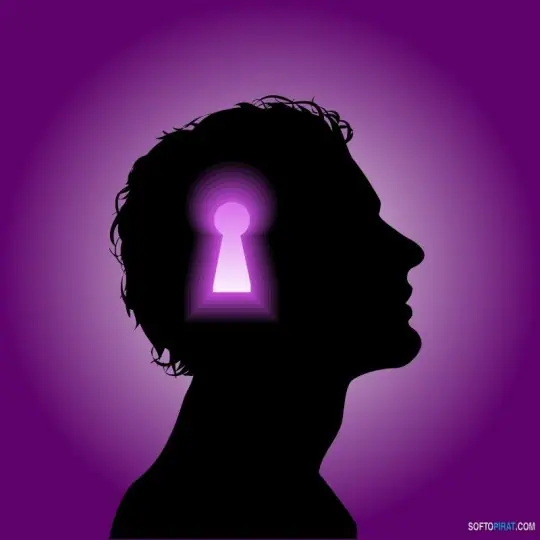
Consciously, a person usually has quite decent goals that meet generally accepted standards. They reason sensibly, think about good things, and all their intentions are, as it seems to them, entirely positive. Yet unconsciously, at the very same moment, they broadcast into the outer world their unrecognised roles and states.
For example, while suffering and feeling helpless but suppressing these states, a person may identify with the role of the Victim. In this way they will draw the attention of people in whom complementary (that is, matching) roles are active. Namely: the Tyrant (Persecutor) or the Rescuer.
In the psychology of states we call these roles subpersonalities.

How do subpersonalities appear?
From the moment an important, significant need is stopped, as they say, “in mid-flight”, the energy meant for fulfilling it is blocked. A kind of plug forms (a psychological block), which makes it necessary to hold back and accumulate psychic tension. If there is no release (the need is not met), all of this turns into a certain amount of psychic energy that becomes highly condensed
Over time the tension grows, and the energy condenses so much that it becomes an almost tangible psychic formation. And, most importantly, a very influential one. This creates the risk of a release at the wrong moment, or a path into addiction of any kind, if the person is not aware of these condensations.
Have you ever met people who look wonderful and yet, in spite of that, you feel uneasy in their presence and want to run away?
This is what a double message looks like, and it confuses everyone taking part in the communication.
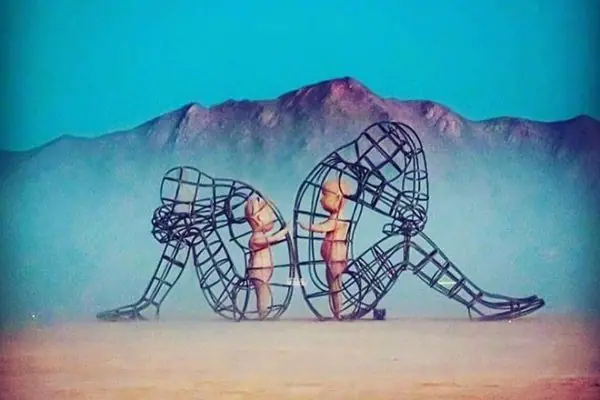
We take in 55% of the information about a person through the hidden messages they broadcast. And if you do not know the messages that live on the surface of your psychic field, the people around you most likely often surprise you with their (wrong, of course) attitude towards you.
They behave as if it were written on your face:
- “it’s fine to litter in my space”
- “I’m bad and not worth anyone’s attention”
- “I don’t need money”
- “I love suffering and being alone”
- “shout at me”
- “I don’t need relationships”
- “I can’t be loved”
Add your own.
So how do you find a resource?
How do you find out what is written on the banner you carry in front of your face, the one meant to tell the people around you about you?
There are several ways, and one of them is the method of psychosynthesis.
It is the method of R. Assagioli, which we use successfully in our practice and which brings remarkable results.
Soon, using the psychosynthesis method, we start the training course “The Triangle of Power”
The course consists of four modules and aims at:
- psychological correction of states
- getting to know the Karpman Triangle
- restoring the balance between psychological roles.
This, in turn, has a positive effect on your relationship with yourself and with the people around you.
The course also helps you fulfil your wishes and meet your needs in a constructive way.
It gives you the chance to overcome a tendency towards addictions of various kinds and to work through the script of co-dependent relationships.
Would you like to manage your states, switch between roles and recognise the signs of destructive behaviour scripts?
To take control of your behaviour and achieve effective results in communication, negotiations and social relationships?
Then we invite you to our course “The Triangle of Power”.
The course is led by Anna Oleksandrivna Shyman.