 Анна Шиман

Draft translation. This text was translated automatically and has not been proofread yet — if something reads oddly, it does.
This article explores how the mother complex influences personality development and success in life.
What does a child take in with their mother’s milk?

With their mother’s milk a child takes in a literal and a symbolic attitude towards themselves. And the way the child sees and feels it will lay the foundation of their attitude towards themselves, through self-esteem and their sense of self.
A child’s contact with their mother becomes a foundation for life and gives the answer to the most important question for each of us: whether we have the right to be in this world, to expect good things from it and to lay claim to success.
Let’s look at this question more closely.
Before birth, a child has the experience of life in the mother’s womb, where there is nourishment and a perfect stability compared with life after birth. In this period the child gets a certain experience of “paradise”, of unconditional love that can be received simply by existing, with no conditions and no limits.
After birth, the so-called “expulsion from paradise”, the child adapts to a new life and new conditions. The important, main point of reference after birth, at least until the age of one, will be the figure of the mother.
There is a theory that by the age of 6 a child creates an unconscious script for their future life, and by about 8 they fix it all in place and finish the “details”, shaping their life plan.
And this is not about the child being a genius of intuition who at three knows where they will go to study and whom they will marry.
No. It is about the strategy of interacting with yourself and the world.
It is about how the limits, the permissions and the prohibitions on fulfilling your desires and needs in life will be formed.
After birth, the foundation of these “scripts” is shaped first and foremost by interaction with the mother figure.
Birth mother. Not the birth mother. It doesn’t matter. That is not the point right now.
The fact is that each of us has an experience of contact with the maternal, embodied in someone, in the period after birth.
Yes, before birth there is the influence of genetics and of the environment around the pregnant mother, and after birth the mother figure comes to the fore and begins to actively influence the child through her direct actions and deeds while interacting with and raising the child.
Later the father figure, other relatives, nannies, nursery teachers, schoolteachers, coaches and others increasingly add to this influence. We talk about this in detail on our online course “Practical Psychology”.
But right now we are talking about how a relationship with the world is born through the relationship with the mother figure.
In particular, about how the mother will respond when the child signals their needs: hunger, cold, when something hurts, when they are too hot. When they want contact and play.
A child forms their attitude towards themselves on the model of their relationship with the mother figure — not even with the mother herself, but with her image, the way the child sees her.
Whatever attitude the child feels coming from their mother, that is the impression they will lay at the foundation of the mother image and of their image of themselves. The child does not know that mum is having problems with dad, that she has postnatal depression, that she is afraid to look after the baby in case she does something wrong, and is waiting for grandma to come with instructions. The child sees whether their needs are met or not; they feel mum’s attitude towards them — warmth or coldness. And on the basis of this non-verbal material the child decides whether to trust mum, whether the maternal world can be trusted, and whether the world in general can be trusted — the world that the mother symbolises through an atmosphere of love, acceptance and care or, on the contrary, through ignoring needs and using physical force. Whether to trust themselves.
A child quickly learns how best to present their “I want” to this world. The mother’s response helps them with this. If they cried and someone came and met their needs, they will keep doing so. If they cried and for some reason were ignored, they will learn to lie quietly and wait for someone to come and notice them.
And this is already the foundation for behavioural scripts in future adult life.
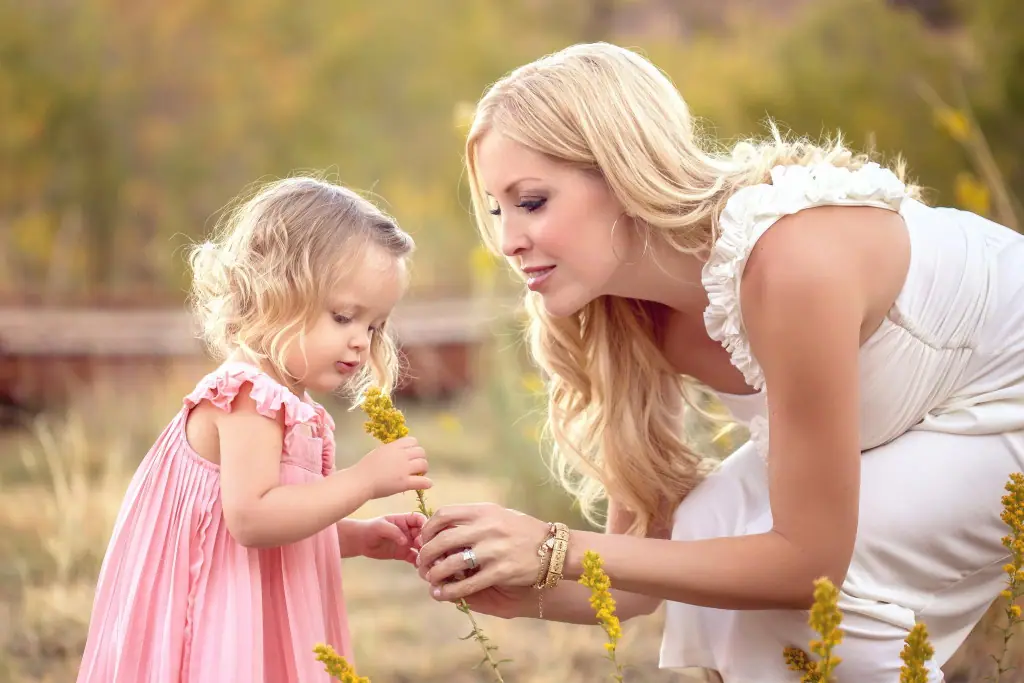
Melanie Klein, the well-known psychoanalyst, speaks of the “good” and the “bad” breast. That is, when the mother not only feeds the child milk but is also emotionally engaged with the child during feeding, a positive experience of contact forms, which gives the child the sense of being loved.
A child of this age does not have philosophical categories such as what love is according to Kant or the Bible. But there are sensations. Feelings. They are stored in the body, as psychosomatic manifestations confirm.
The “bad” breast is about a state where there are problems either with the milk, or with the mother’s emotional involvement in the child’s life, or both at once. After all, if the mother’s milk and attention are a vital resource and the mother does not have it for the child, an impression forms at the level of instinct that the child is rejected, that there is no place and no resource for them. But in this world there is certainly pain and grief for them — at the very least from the “empty”, “bad” breast.
A threat to life is felt, and later this state affects self-esteem, one’s claims to success in society, relationships and other areas of life.
And this, too, shapes forms of adaptation and life scripts.
Here I need to clarify something.
Up to this point I have mentioned the mother image, the figure of the mother, but have not called it the actual mother.
What is the point in the context of this article’s topic?
The point is that even before contact with the actual mother begins, the child touches something abstractly maternal. That is, in the womb, during birth and in the first period of life after birth, the child did not single out any figures. It was an irrational contact with archetypal, maternal forces — both those that, so to speak, give life at the level of “paradise” and those that expel from this “paradise”.
Jung called these primordial forces archetypes, and the Mother Archetype contains the whole potential of the maternal — from positive to negative, from a mother who loves her child to a mother who hates it.
Described through complexes, this would be the complex of the Virgin Mary, the divine mother, and the complex of Lilith, who hates children, steals them from life and destroys them. And contact with one’s actual mother is laid over these forces. The poles of the archetypes become the basis for the “bad” and the “good” breast. In an ideal situation these poles join into one image in the course of personal development and of uncovering the contents of the complexes within, forming a single image of the natural mother. She is like the Universe. She can grant life and water a new harvest with rain, or she can destroy that same harvest with drought. But if the child, and later the adult, becomes fixed at one of the poles, where the mother is either bad or good for them, they begin to project one of the poles onto the world around them too. After all, it is not just the “breast” that is bad, but everything around it — that is, the world — is like that. And relationships with no love and no resource for the child are absorbed as a belief: in this world there is nothing for me, or there is, but only in small amounts.
The child learns to cope with this shortage of love.
How?
By cutting down their “I want”. By giving up their needs and desires.
And in adulthood they will measure all their actions against the understanding that there is no resource in the world for them.
And if this person has an idea of where to get this resource, they will “look back” at the inner image of the mother, remembering all the grief and sadness of contact with her world, and it will be easier for them to give up the idea than to risk facing disappointment and rejection.
But this story cannot go on for ever. Either the person begins to rebel against the system, supported by their own nature, which opposes these limits and this injustice, or they submit and, in the state of a victim, through learned helplessness, do not really try to lay claim to anything and become led, dependent, destructive.
So what does a child take in with their mother’s milk?
It is the attitude towards themselves and the way the world can treat them, modelled on the mother. A person takes in their sense of self.
They take in a sense of trust or mistrust towards the world. And this is a script for at least 15-20-30 years.
Before that age it is hard for a person to change anything radically in these “settings”. A big chance for change often comes with radical turns in life — overcoming a deadly illness, surviving a situation where survival seems a miracle. Or it happens during life crises, such as the crisis at 25, the midlife crisis, the empty nest crisis, the loss of loved ones and so on. And there are people who live their whole lives within the primary scripts they themselves created in infancy, explaining it by saying that changing anything is beyond their power. But if as an infant you had no way of standing up for your “I want”, for your individuality, in adult life you do get this chance.
And here the choice is up to each person — whether they need this chance or not, what to do with it — take it or ignore it.
If, while reading this reflective article, you found yourself thinking about what is written, if some lines struck a chord with you and you felt there is something here about your own state, I invite you to correct everything that you, as a small child, took to be the truth and that is now keeping you from being a happy person, from responding with dignity and accepting attention and love for yourself, and that affects your relationships, your family life, your chance to have children, your career and the quality of your life.
Petro Oleksandrovych Poliashchenko, teacher at the PSYVISION centre